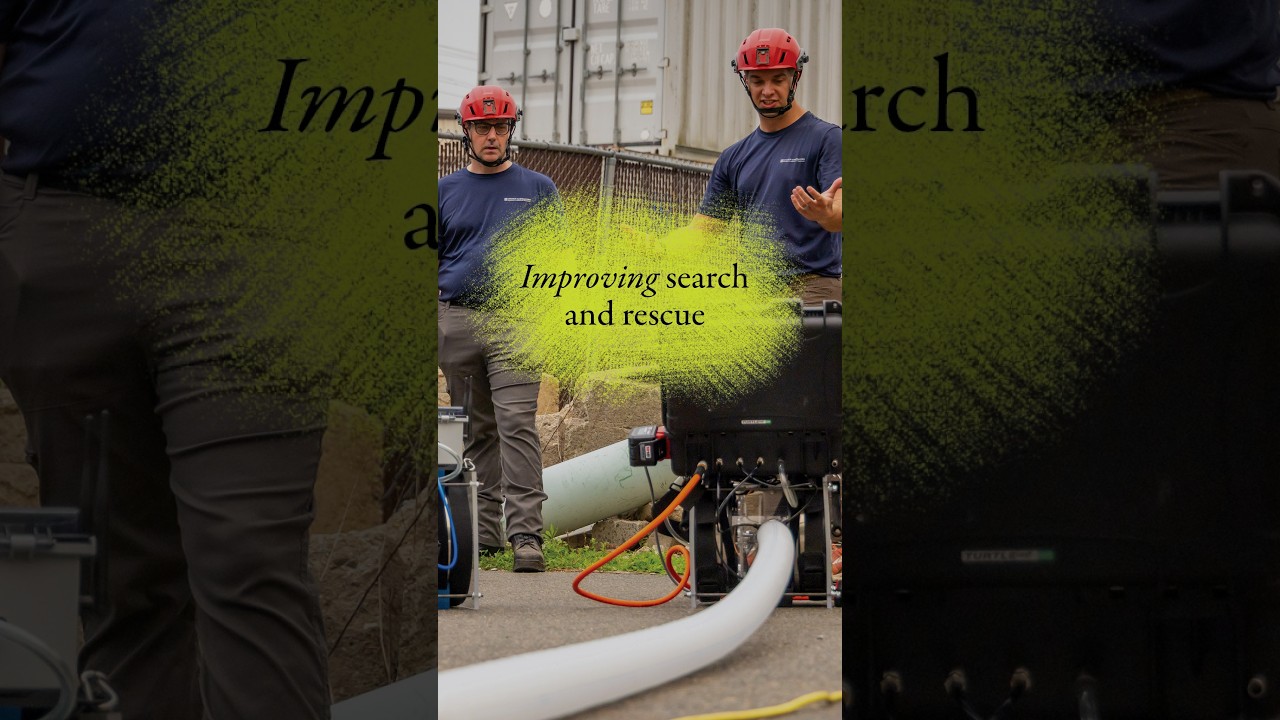


- 0:31Helping Rescue Teams Search Dangerous SpacesWhen an earthquake strikes or a building collapses, first responders face a life-or-death challenge: how do they locate trapped victims without putting rescue crews at greater risk?Researchers at the University of Notre Dame and MIT Lincoln Laboratory partnered with Massachusetts Task Force 1 first responders to develop SPROUT—the Soft Pathfinding Robotic Observation Unit. The flexible, inflatable “vine robot” combines soft robotics, acoustic sensors, and real-time mapping to maneuver through debris and give rescue teams a safer way to search disaster zones.
- 2:01How Vine Robots Save Lives in Disaster ZonesWhen an earthquake strikes or a building collapses, first responders face a life-or-death challenge: how do they locate trapped victims without putting rescue crews at greater risk?In search and rescue operations, reaching confined void spaces beneath concrete and rubble is often one of the most dangerous parts of the response. Seconds count, but traditional tools cannot always reach narrow gaps or unstable areas safely.Researchers at the University of Notre Dame and MIT Lincoln Laboratory partnered with Massachusetts Task Force 1 first responders to develop SPROUT—a Soft Pathfinding Robotic Observation Unit. The flexible, inflatable “vine robot” combines soft robotics, acoustic sensors, and real-time mapping to maneuver through debris and give rescue teams a safer way to search disaster zones.00:00 The danger first responders face in structural collapses 00:16 The challenge: Locating trapped victims quickly and safely 00:39 How soft robotics navigate hazardous spaces 01:18 Using acoustic sensor technology to map collapse zones 01:28 Why field-testing with first responders matters 01:44 What would you fight for? | Notre DameFor more information on the vine robots and Professor McGuinness' research, visit: https://go.nd.edu/FFRoboticSearchandRescue
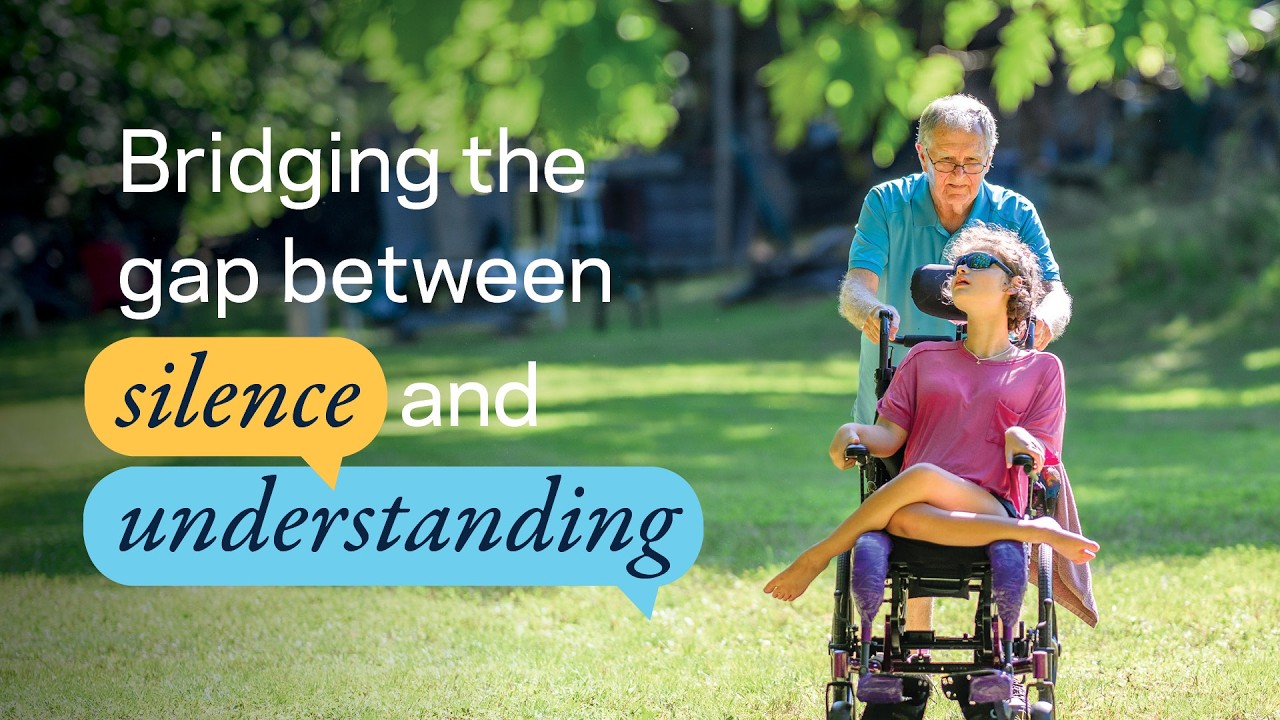
- 0:31Voice4PIMD: AI for Nonverbal CommunicationNotre Dame professor Jarek Nabrzyski is working with a team of researchers to develop Voice4PIMD, an AI system to help caregivers interpret the unique nonverbal cues of people with profound intellectual and multiple disabilities.The technology learns how an individual communicates through facial expressions, eye gaze, body movement, vocalizations, and other nonverbal cues.Learn more about the research: go.nd.edu/FFNonverbalCommunications
- 12:42NDWorks Podcast: Where potential becomes purpose with Andrew HoytIn this episode of NDWorks Podcast, host Natalie Davis Miller sits down with Andrew Hoyt, executive director of the new Center for Academic Transformation and Excellence, or CATE. Hoyt talks to us about the offices within CATE and how they work together to support ND students.This episode of NDWorks Podcast was edited by Michael Wiens, with original music by Alex Mansour and additional music provided by Universal Production Music.
- 2:01How AI is Helping Nonverbal People CommunicateHow can artificial intelligence bridge the gap for nonverbal individuals and their caregivers?At the University of Notre Dame, Prof. Jarek Nabrzyski and his research team are developing Human-Centered AI technology designed to interpret nonverbal cues—such as facial expressions, body movements, and heart rate. Partnering with family caregivers like Ed Fennell, who has spent 19 years advocating for his granddaughter Haley, this project aims to create affordable, accessible AI tools that empower new caregivers with empathy and dignity.00:00 Ed and Haley’s story: The challenge of nonverbal communication 00:24 19 years of caregiving for someone with PIMD 00:35 Partnering with Notre Dame on AI research 00:54 Voice4PIMD: Augmentative and alternative communication technology 01:25 Supporting caregivers and continuity of care 01:48 Fighting for nonverbal communication | Notre DameLearn more about Prof. Nabrzyski's research: https://go.nd.edu/FFNonverbalCommunications#Notre Dame #AI #Accessibility #ArtificialIntelligence #AssistiveTechnology
- 0:29Notre Dame Stories Podcast | TrailerFrom interviews with experts to storytelling from the places where research is taking place, the Notre Dame Stories podcast brings listeners closer to the work of creating knowledge and delivering impact for a world in need.Listen and subscribe (https://stories.nd.edu/podcast/)
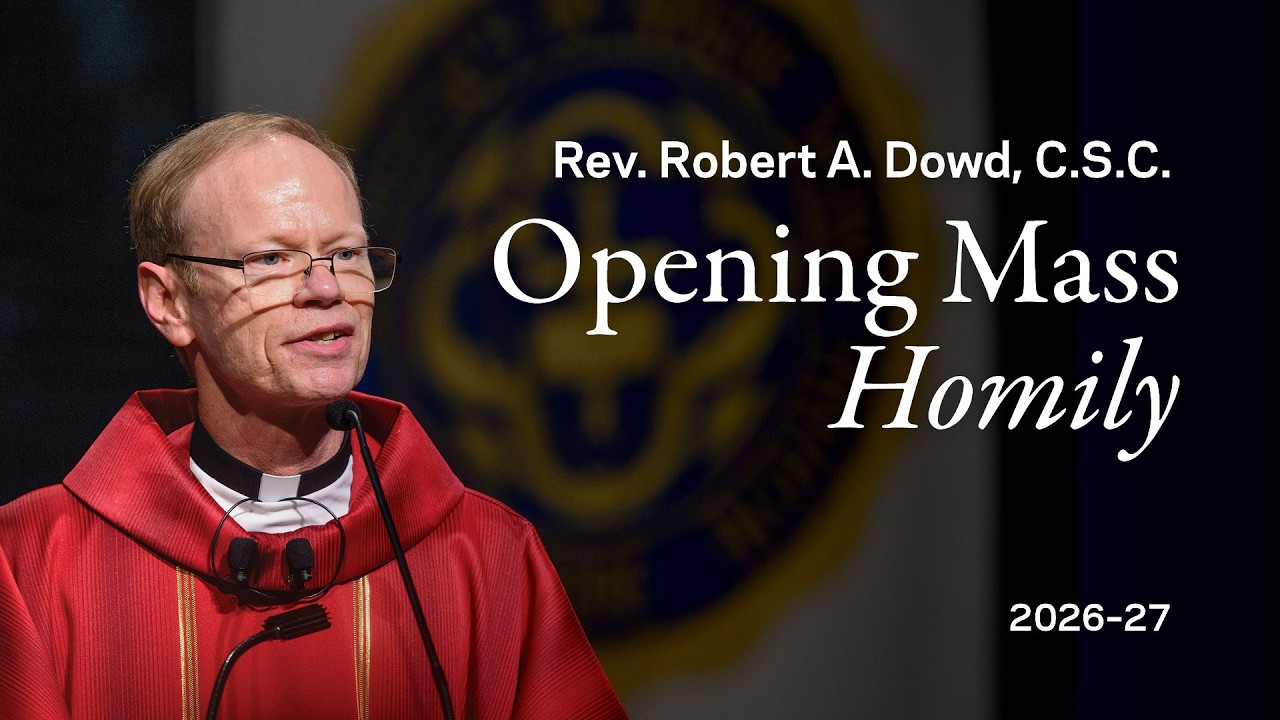
- 11:52Opening of the Academic Year Mass 2026-27: Father Dowd's HomilyUniversity of Notre Dame President, Rev. Robert A. Dowd, C.S.C., delivers the homily at the 2026-27 Opening of the Academic Year Mass in Purcell Pavilion on August 24, 2026.
- 29:30ND Works Podcast: Becoming more global with Michael PippengerIn this episode of NDWorks Podcast, host Natalie Davis Miller sits down with Michael Pippenger, vice president and associate provost for internationalization. Pippenger walks us through all that Notre Dame Global is, its impact on the world, and how you might be able to get involved. This episode of NDWorks Podcast was edited by Michael Wiens, with original music by Alex Mansour and additional music provided by Universal Production Music.
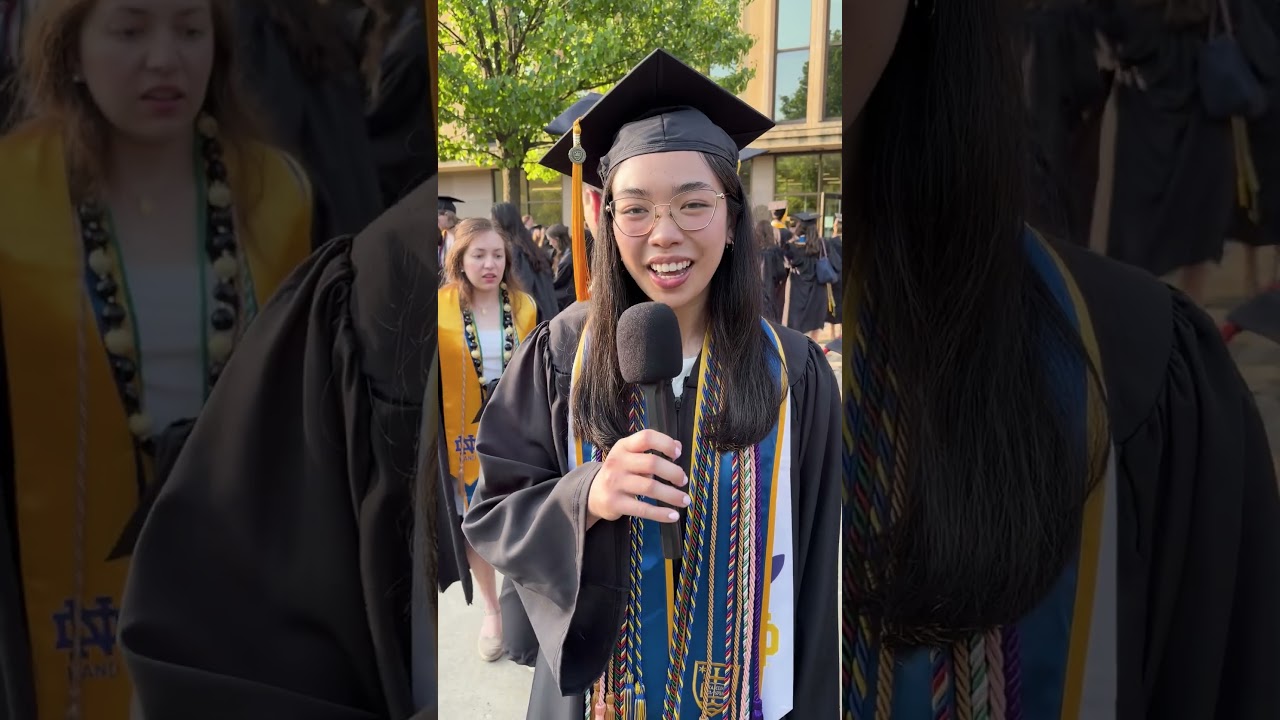
- 2:17What comes after Notre Dame?The next chapter starts soon. Here’s where some of our new graduates are headed after Notre Dame.
- 1:09:562026 Commencement: Electrical Engineering undergraduate diploma ceremonyThe University of Notre Dame's Department of Electrical Engineering in the College of Engineering hosts its 2026 undergraduate diploma ceremony on May 17, 2026.


Video

My Menu
- Commencement
- dCEC Fall Conference
- ND Safe
- Academics
- Army ROTC
- Arts at ND
- ND Athletics
- NDBookstore
- Calendar
- Campus ID Card
- Computer Labs
- On Campus Dining
- Campus Tours
- Canvas
- Directory
- Faith
- FindND
- Inside ND
- Irish Compass
- Languages & Cultures
- Laundry
- Hesburgh Libraries
- Map
- Mobile Printing
- ND Magazine
- News
- Photos
- Research
- Safety
- Shuttle
- Student Life
- Sustainability
- Transit
- Webcams
- Wifi Feedback