




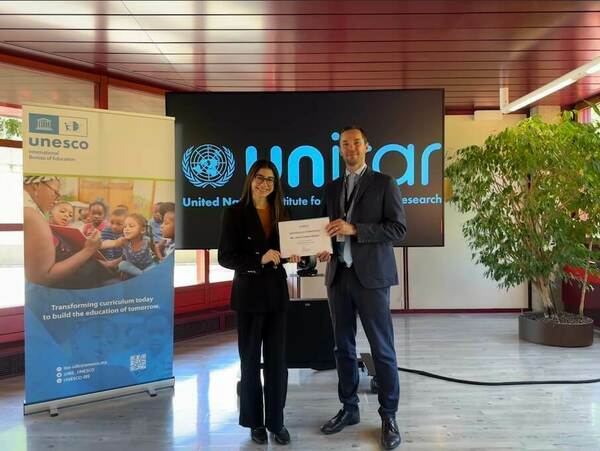


What does diplomacy feel like up close? Not in theory, but in the rooms where global decisions are actually made. In May 2025, I had the chance to find out.
With the generous support of the Nanovic Institute for European Studies and the MSPS Program, I joined the UNITAR Geneva Immersion Programme, a week-long opportunity to step inside institutions I’d only ever studied from afar. From the United Nations Office at Geneva to the World Health Organization, the WTO, each day placed us face-to-face with the realities of multilateral diplomacy. I arrived with a framework built in classrooms. I left with a far more complex understanding—one shaped by conversations, contradictions, and the people working behind the scenes to keep diplomacy alive.
Each day was packed with lectures, workshops, and site visits. We met under the Broken Chair sculpture each morning before walking into a new institution. We attended workshops on UN career paths, leadership, and public speaking, led by former UN trainers and diplomats. We were encouraged to ask questions, challenge assumptions, and reflect on what it takes to lead and adapt within large multilateral systems.
"The value of the trip wasn’t just in what I learned—it was in how I learned it."
One moment that stayed with me was our visit to the World Trade Organization. We sat in a formal meeting room as a communications officer gave a detailed overview of the WTO. He spoke about the rising difficulty of reaching consensus in an increasingly fragmented global economy, the limits of the multilateral system, and the role Europe has historically played in holding it together. That conversation brought into focus the tension between institutional ideals and geopolitical reality. It made the economic theories I had studied feel more real—and more fragile.
Beyond the institutional visits, the program also emphasized diplomacy as a skill set. A negotiation workshop, led by a UNITAR expert, took us through the practical dimensions of multilateral diplomacy—how to prepare for negotiations, understand the interests of other parties, and build consensus in high-pressure settings. We worked through a simulation exercise that pushed us to think strategically, communicate clearly, and anticipate roadblocks. What struck me most was how much diplomacy depends not just on policy positions, but on interpersonal dynamics—reading the room, choosing when to speak, and knowing how to move a conversation forward when trust is thin.

The value of the trip wasn’t just in what I learned—it was in how I learned it. Being in the room, listening to people who have spent decades navigating these systems, and observing how different institutions respond to pressure gave me a more grounded view of global governance. It also clarified the areas I want to explore more deeply—especially around the intersection of multilateralism and sustainable economic development.
I’m truly grateful to the Nanovic Institute for European Studies and the MSPS Program for making this experience possible. Their support gave me the chance to engage directly with the institutions I had long studied from a distance—to walk their halls, hear from the people who shape them, and reflect critically on their role in today’s world. This experience didn’t just confirm my interest in global governance—it reshaped how I think about its limitations and how I might contribute to making it more effective and accountable.
If I could offer one piece of advice to future Nanovic-funded students, it would be this: let the experience challenge your frameworks. Go in with questions, not answers. Be curious and stay open—even when what you encounter doesn’t match what you expected. Not everything will be clear or easy to categorize, and that’s a good thing. The ambiguity is part of the learning. Take notes, ask difficult questions, and sit with the discomfort of not knowing exactly what to make of something right away.
You might leave with fewer certainties than you arrived with—but what you gain is far more valuable: a deeper, more honest understanding of how the world works, and where your own voice fits within it.
Leticia Cardoso Queiroz ’26 is a Notre Dame student with majors in business analytics and global affairs with minors in European studies and finance. During the winter break of the 2024-25 academic year, she traveled to Portugal to study the labor market integration of migrants. Queiroz also recieved funding from the Multicultural Student Programs and Services study abroad award.
Originally published by at nanovic.nd.edu on September 30, 2025.
Latest Research
- Fighting for maternal healthThe United States has the highest maternal mortality rate of developed nations. An innovative postpartum care model from Notre Dame can save mothers around the globe. Read the story Originally…
- NSF Cyber SMART’s fall meeting shapes fifth year of project, legacy and future plans, and adds new memberThe U.S. National Science Foundation (NSF) Cyber SMART center gathered for its fall meeting on the University of Notre Dame campus this September. The meeting served as a checkpoint with progress reports and new projects from research leads and students…
- Slavic and Eurasian studies professor wins Humboldt fellowship to research how Russia’s religious past shapes its presentWhen Russia invaded Ukraine on Feb. 24, 2022, Sean Griffin realized his second book needed a new title. Griffin, an associate professor in the University of Notre Dame’s Department of…
- Notre Dame’s R.I.S.E. AI Conference builds interdisciplinary collaboration to inform human-centered artificial intelligenceAs artificial intelligence (AI) transforms nearly every sector of society — from healthcare and education to governance and global development — a critical question emerges: How can we conscientiously design and deploy these powerful technologies to positively impact society? This…
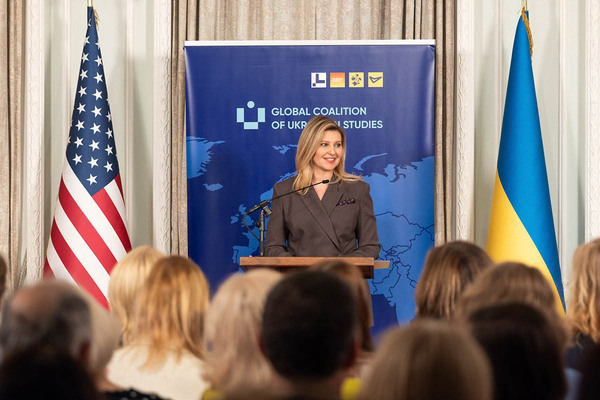
- University of Notre Dame joins the Global Coalition of Ukrainian StudiesThe University of Notre Dame has joined the Global Coalition of Ukrainian Studies after signing a Memorandum of Cooperation (MOC), formalized on September 24, 2025, at the Ukrainian Institute of America in New York City. Notre Dame joined four other American…
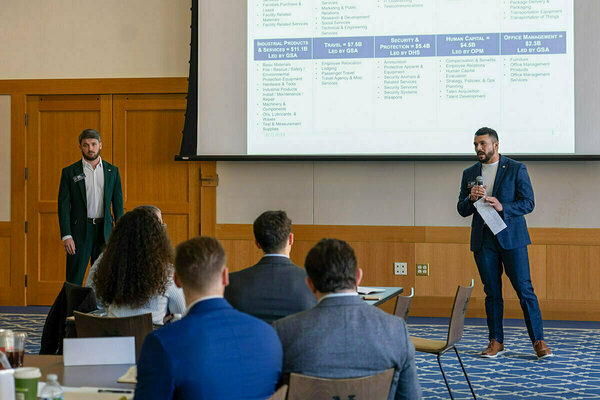
- The University of Notre Dame’s Mendoza College of Business and Industry Labs team up to inspire national security manufacturing competitiveness in the regionThe South Bend - Elkhart Region is full of manufacturing companies that are poised to grow, and Executive Master of Business Administration (EMBA) and Master of Business Administration (MBA) students at the University of Notre Dame are finding innovative ways to contribute to that growth. Earlier…