







In memoriam: Winfried ‘Fred’ Dallmayr, professor emeritus of political science


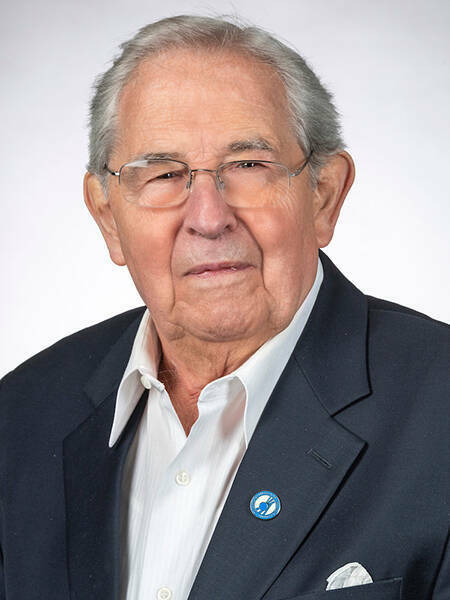
Winfried “Fred” Dallmayr, professor emeritus of political science at the University of Notre Dame, died June 5. He was 95.
A native of Germany, Dallmayr experienced a tumultuous childhood during World War II that impacted him greatly and shaped his trajectory as a political theorist and philosopher. His research focused on modern and contemporary European thought, with an interest in comparative or cross-cultural philosophy.
“He fervently believed that political theorists should not limit themselves to Western ideas, but they should be open to global political philosophy and theory,” said A. James McAdams, the William M. Scholl Professor of International Affairs. “He was also a proponent of the idea that morality should not be left up to the individual to determine but rather should grow out of the meaningful interactions of fellow human beings. In this sense, especially given the emphasis that he put on spirituality, Fred was a true Notre Dame intellectual.”
While a part of Notre Dame’s Department of Political Science, Dallmayr was a recipient of a National Endowment for the Humanities fellowship in 1978 and a Fulbright Research Grant in India in 1991. He retired in 2004 as the Packey J. Dee Professor of Political Science.
He authored 40 academic books, averaging a production of one book a year, many of which were translated into varying languages. He also co-wrote and edited books until he was 94.
A sampling of his recent publications include “Contemporary Chinese Political Thought: Debates and Perspectives” (2012), “Return to Nature?: An Ecological Counterhistory” (2011), “Integral Pluralism: Beyond Culture Wars” (2010), “Comparative Political Theory: An Introduction” (2010), “Civilizational Dialogue and Political Thought: Tehran Papers” (2007) and “In Search of the Good Life: A Pedagogy for Troubled Times” (2007).
“He was extraordinary in that sense, and they were high-quality books based on first-rate scholarship, and his works were recognized as such by people around the world,” said McAdams, who noted he saw Dallmayr give a book presentation only four weeks before his death. “Until the very end, he was the consummate intellectual.”
Dallmayr began his academic career in Germany and Italy. After immigrating to the United States in 1955, he received a doctorate in political science from Duke University in 1960 and taught at Purdue University until he joined the Notre Dame faculty in 1978, holding a joint appointment in the Department of Philosophy.
He also served as the president of the Society for Asian and Comparative Philosophy, an advisory member of the scientific committee of Reset Dialogues on Civilizations (Reset DOC) in Rome, the executive co-chair of World Public Forum Dialogue of Civilizations (WPF-DOC) in Vienna, and was a member of the supervisory board of the Dialogue of Civilizations Research Institute in Berlin.
Dallmayr is survived by his wife, Ilse Dallmayr; two children, Dominique and Philip; and two grandchildren, Keegan and Josefina.
Originally published by at al.nd.edu on June 12.
Latest ND NewsWire
- Notre Dame Lead Innovation Team partners with local WIC program to identify, prevent lead poisoning in childrenB.A.B.E. store “shoppers” now have something new to help their families: free lead screening kits offered by the University of Notre Dame’s Lead Innovation Team.
- Vatican honors Martin and Carmel Naughton with papal awardThe late Pope Francis, in one of his last acts, conferred the honour of the Order of Saint Gregory the Great upon Carmel and Martin Naughton, Trustee Emeritus of the University of Notre Dame. The papal honor is in recognition of the Naughtons’ outstanding philanthropy in the areas of education and the arts, particularly in the provision of philanthropic support and scholarships to Catholic education at the University of Notre Dame and Kylemore Abbey, and in their transformative contributions to higher education in Ireland.
- Brain tumor growth patterns may help inform patient care managementAssistant Professor Meenal Datta (University of Notre Dame/Wes Evard) A team of researchers from the University of Notre Dame, Harvard Medical School/Massachusetts General Hospital, and Boston University has developed a technique for measuring a brain tumor’s mechanical force and a new model to estimate how much brain tissue a patient has lost.
- Notre Dame elects two new TrusteesTwo new Trustees — John F. Crowley and Danielle Walker Merfeld — have been elected to serve on the University of Notre Dame’s Board of Trustees effective July 1. …
- From reaction to resolution: The future of allergy treatmentTwelve-year-old Lauren Eglite was thrilled to attend a Notre Dame football game with her father, Erik, in 2017, even though her acute peanut allergy demands constant vigilance. She was even more excited when the stadium’s brand-new video board aired an NBC Fighting…
- Notre Dame student uses ‘American Ninja Warrior’ spotlight to fight world hunger via his nonprofitOn July 14 (Monday), a University of Notre Dame business student will compete in the semifinal round of NBC’s “American Ninja Warrior” to advocate for an end to world hunger, an ambition he works toward by making knotted dog toys and collecting donations to his nonprofit.


