







‘A ticking clock’: First ground-based survey of damage to Ukrainian cultural sites reveals severity, need for urgency


The war in Ukraine is not just a war against a people, but a war on culture.
And after nearly two years of fighting, it is destroying Ukraine’s cultural heritage on a scale not seen since World War II, according to new research by University of Notre Dame faculty members Ian Kuijt and William Donaruma.
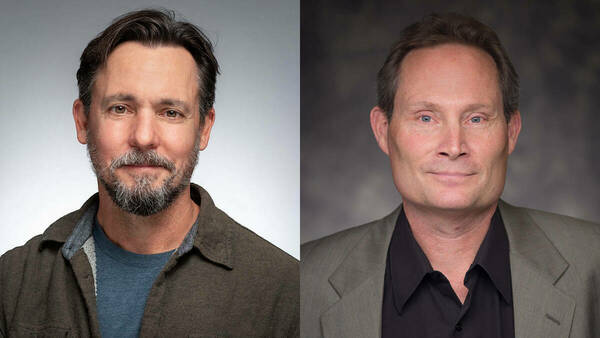
Kuijt, a professor in the Department of Anthropology, and Donaruma, a professor of the practice in the Department of Film, Television and Theatre, visited Ukraine to see firsthand and begin to document the extent of the damage to cultural sites including churches, schools, opera houses, libraries and archaeological sites.
Working in collaboration with researchers from the Taras Shevchenko National University of Kyiv, the Institute of Archaeology at the National Academy of Sciences of Ukraine and the University of Wyoming, the team completed the first ground-based survey of the region since the invasion. Their findings were recently published in the journal Antiquity.
“The intent by the Russians is essentially obliterating Ukrainian culture, heritage and history,” Kuijt said. “They have been targeting cultural features of society that have no military capability, no hardened infrastructures that would be used in defense. And there are many researchers who have started doing work with satellite and aerial photos, but at some point, you have to go into the field to truly get a sense of the damage.”
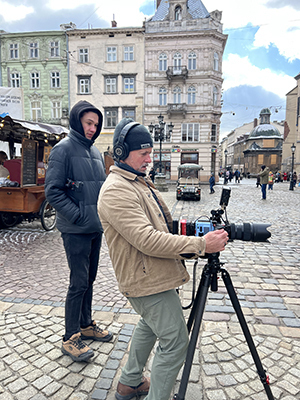
Kuijt and Donaruma visited liberated areas in Ukraine to assess, film and document the destruction. Their interdisciplinary collaboration allowed Kuijt, an archaeologist, and Donaruma, a narrative and documentary filmmaker, to provide a more holistic view of the conditions in Ukraine’s built environment.
Walking through the ruins, Kuijt said, revealed more widespread and far more extensive damage than the team anticipated. They also found that the devastation not only exists above ground from missile strikes, but also extends below the surface due to the widespread trench systems used by military forces.
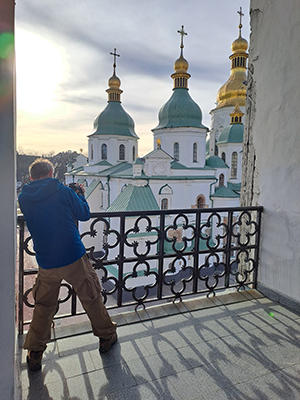
The researchers mapped out the substantial damage incurred by churches and historic buildings from as early as the 11th and 12th centuries. Architectural monuments and UNESCO-listed heritage sites — even those that have appeared fairly intact in satellite imagery — have also suffered.
“Beyond the destruction and damage, particularly in populated, civilian areas, we were astonished to see the amount of preparation and defense of cultural heritage sites and objects,” Donaruma said. “Large sheets of metal covered stained-glass windows. Fortified cages covered statues, and museums were boxing artifacts for storage.”
For every church the researchers found in similar condition, Kuijt estimated there are three to four other archaeological sites below ground that are also impacted.
Despite modern military advancements such as satellites, drones and tanks, much of the war in Ukraine is reliant on trenches and bunkers — which has resulted in digging and tunneling through the ground, often underneath or right up to the foundations of crucial heritage sites. This has likely destroyed thousands of archaeological spaces, according to Kuijt, including medieval cemeteries and Bronze Age settlements.
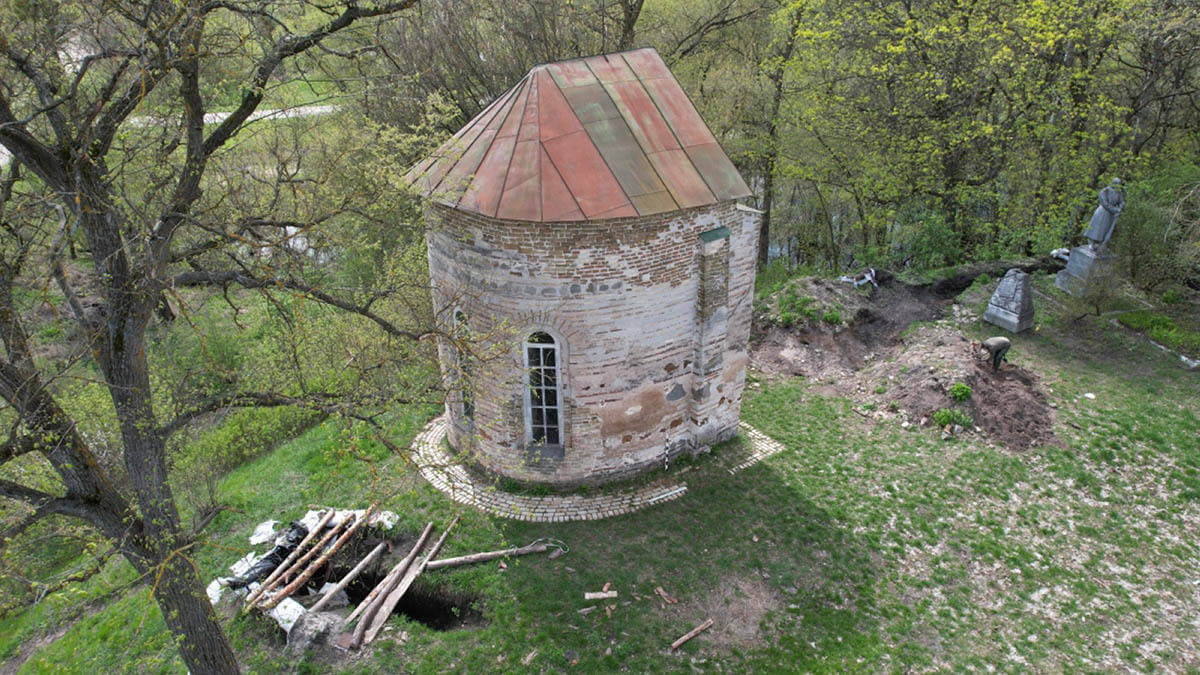
This first hit home for Kuijt and Donaruma when visiting a previously unknown graveyard near St. George Chapel in Oster. There, team members discovered that the trench system had exposed the foundations of the 11th-century church and portions of the cemetery associated with it.
Further explorations revealed that other burial mounds and cemetery sites in the region have been affected by both missile strikes and underground trench systems, including one of the largest 11th-century necropolises in Ukraine.
The region has played a key role throughout human history, Kuijt said, as a crossroads of ancient people, culture, religion, language and literature for thousands of years.
“Some of our best understanding of Paleolithic and Neolithic times was formed around the Black Sea,” he said. “This is where Bronze Age villagers created structures and villages that traded pottery with people from Turkey, Georgia and other places. Vikings moved through and traded in these areas. The emergence of specific forms of Christianity occurred here, along with the construction of its churches — including ritual and religious life that is unique in this area. So, in many ways, this should be viewed as a global heritage.”
Because the war in Ukraine is ongoing, the researchers know that further destruction is likely, especially in the eastern and southern areas of the country where the most intense battles are currently happening. However, it is critical to begin assessing the damage now, even as it continues to occur, the researchers said.
“There is very much a ticking clock,” Kuijt said. “This is essentially cultural triage. We need to assess which antiquities are the most important and the least damaged, and how we can allocate resources to try to protect those as best we can.”
While they anticipate that it may be five to 10 years before archaeologists will be able to truly sort out how much damage has taken place, Kuijt and Donaruma are hopeful their work will help to begin documenting all that the Ukrainian people have lost — and to prevent or minimize the ongoing devastation.
“Ian and I are both longing to return to Ukraine to continue our work with Ukrainian archeologists and students to keep the world apprised of the war and impact it has on lives and cultural heritage,” Donaruma said. “We have made so many friends in Ukraine in a short period of time that our passion to help and continue this work is of the utmost importance.”
Contact: Tracy DeStazio, associate director of media relations, 574-631-9958, tdestazi@nd.edu
Contact: Carrie Gates, associate director of media relations, 574-631-4313, c.gates@nd.edu
Latest International
- Vatican honors Martin and Carmel Naughton with papal awardThe late Pope Francis, in one of his last acts, conferred the honour of the Order of Saint Gregory the Great upon Carmel and Martin Naughton, Trustee Emeritus of the University of Notre Dame. The papal honor is in recognition of the Naughtons’ outstanding philanthropy in the areas of education and the arts, particularly in the provision of philanthropic support and scholarships to Catholic education at the University of Notre Dame and Kylemore Abbey, and in their transformative contributions to higher education in Ireland.
- Prioritizing prenatal care may decrease low birth weight outcomes in The Gambia, Notre Dame research findsA new study co-authored by University of Notre Dame researchers highlights the importance of prenatal care for improving the health of mothers and newborns, providing evidence that can inform policy.
- Navigating the waters of peace: Researchers address challenges, opportunities in implementation of Colombia's Peace AgreementNearly half of the commitments outlined in Colombia's historic peace accord face significant challenges and may not happen in time unless policymakers make several key interventions, warns a new report from Notre Dame's Peace Accords Matrix. The report offers a blueprint to salvage an accord that has lagged behind its implementation deadlines, putting its legacy at risk. It highlights timely fixes that can strengthen the agreement.
- Partial peace deals may facilitate comprehensive accords, offering roadmap for policymakers, practitionersPartial peace agreements — deals that address targeted issues on the way to larger comprehensive accords — could provide a blueprint for peacebuilding policymakers and practitioners, according to new University of Notre Dame research.
- CANCELED: University to host Cardinal Pedro Barreto of Peru and Cardinal Peter Turkson of Ghana as part of Notre Dame ForumAs part of the 2024-25 Notre Dame Forum, Cardinal Pedro Ricardo Barreto Jimeno, S.J., of Peru and Cardinal Peter Kodwo Appiah Turkson of Ghana will visit the University of Notre Dame to participate in a conversation with President Rev. Robert A. Dowd, C.S.C., at 11:30 a.m. April 25 in the Smith Ballroom of the Morris Inn. The conversation is open to the public and will also be livestreamed for both Spanish-speaking and English-speaking audiences.
- ‘Who the messenger is matters’: Cultural leaders can positively influence population growthFertility rates across the world have been steadily dropping since 1950. Pinpointing the reasons is at the heart of Lakshmi Iyer's work as a professor of economics and global affairs. Her research exemplifies the kind of population-level research that Notre Dame Population Analytics (ND Pop), a new research initiative at the University, seeks to foster.


