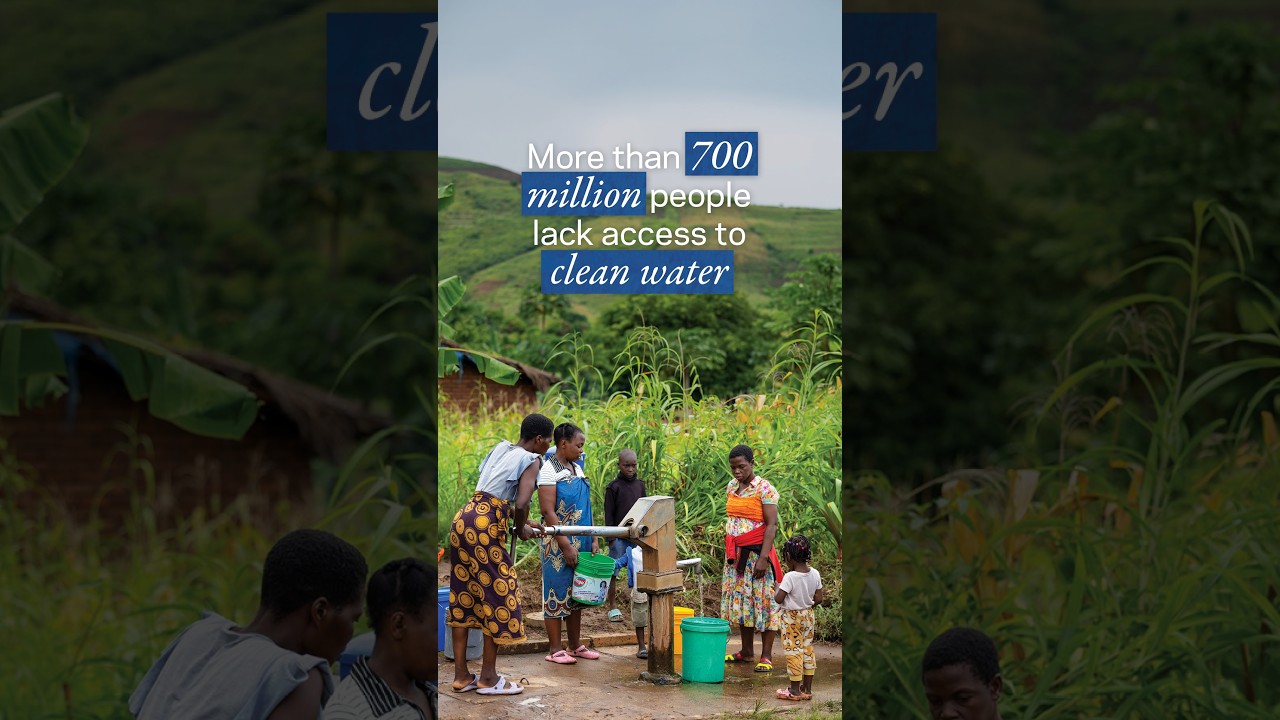





- 0:31How Data Science Keeps Clean Water FlowingHow can data science protect clean water access?Over 50,000 communal water pumps across Sub-Saharan Africa are out of service. University of Notre Dame professors Chengcheng Zhai and Alfonso Pedraza Martinez use mathematical optimization and predictive data modeling to manage water pump networks, schedule maintenance, and prevent system downtime before it happens.🔗 Learn more about Notre Dame research: https://go.nd.edu/FFWaterAccess#CleanWater #DataScience #NotreDame #Shorts #TechForGood
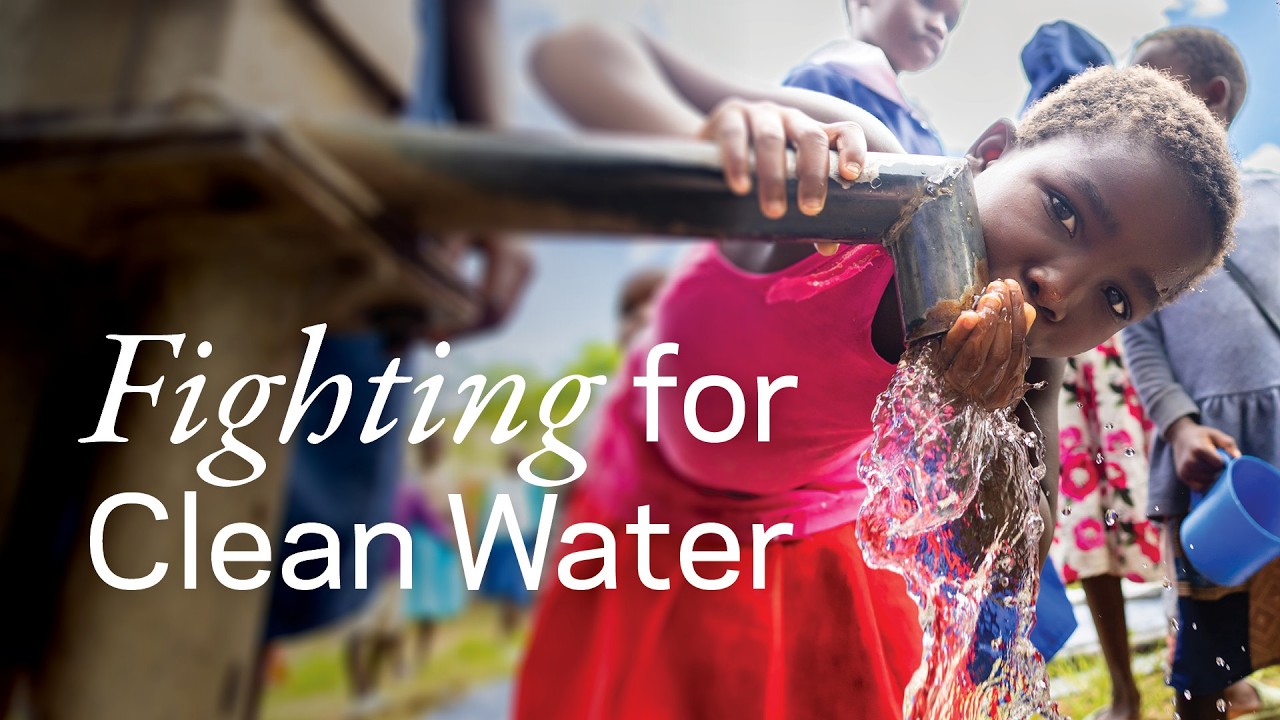
- 2:01Fighting for Universal Access to Clean WaterIn Sub-Saharan Africa, nearly 200 million people rely on communal hand pumps for clean drinking water—yet over 100,000 of these pumps are currently broken. When a water system fails, children miss school to fetch water, economic opportunities stall, and entire communities lose access to a basic necessity.Researchers Prof. Chengcheng Zhai and Prof. Alfonso Pedraza Martinez from the University of Notre Dame are collaborating with local engineers, water pump committees, and MBA students in Malawi to solve this crisis. By leveraging historical data and mathematical optimization modeling, their team identifies when and where water points are likely to fail, enabling proactive maintenance, better spare part distribution, and longer-lasting clean water access.00:00 Water infrastructure challenges in sub-Saharan Africa 00:26 Notre Dame's data-driven approach 00:47 Applying mathematical optimization to maintenance 01:08 Local community engagement & capacity building 01:19 The broader social and economic impact of reliable water 01:44 What would you fight for? | Notre DameLearn more about Notre Dame's work fighting for universal access to clean water: https://go.nd.edu/FFWaterAccess
- 2:01Inflatable Vine Robots: The Future of Search & Rescue | Notre DameWhen an earthquake strikes or a building collapses, first responders face a life-or-death challenge: how do they locate trapped victims without putting rescue crews at greater risk?In search and rescue operations, reaching confined void spaces beneath concrete and rubble is often one of the most dangerous parts of the response. Seconds count, but traditional tools cannot always reach narrow gaps or unstable areas safely.Researchers at the University of Notre Dame and MIT Lincoln Laboratory partnered with Massachusetts Task Force 1 first responders to develop SPROUT—a Soft Pathfinding Robotic Observation Unit. The flexible, inflatable “vine robot” combines soft robotics, acoustic sensors, and real-time mapping to maneuver through debris and give rescue teams a safer way to search disaster zones.00:00 The danger first responders face in structural collapses 00:16 The challenge: Locating trapped victims quickly and safely 00:39 How soft robotics navigate hazardous spaces 01:18 Using acoustic sensor technology to map collapse zones 01:28 Why field-testing with first responders matters 01:44 What would you fight for? | Notre DameFor more information on the vine robots and Professor McGuinness' research, visit: https://go.nd.edu/FFRoboticSearchandRescue
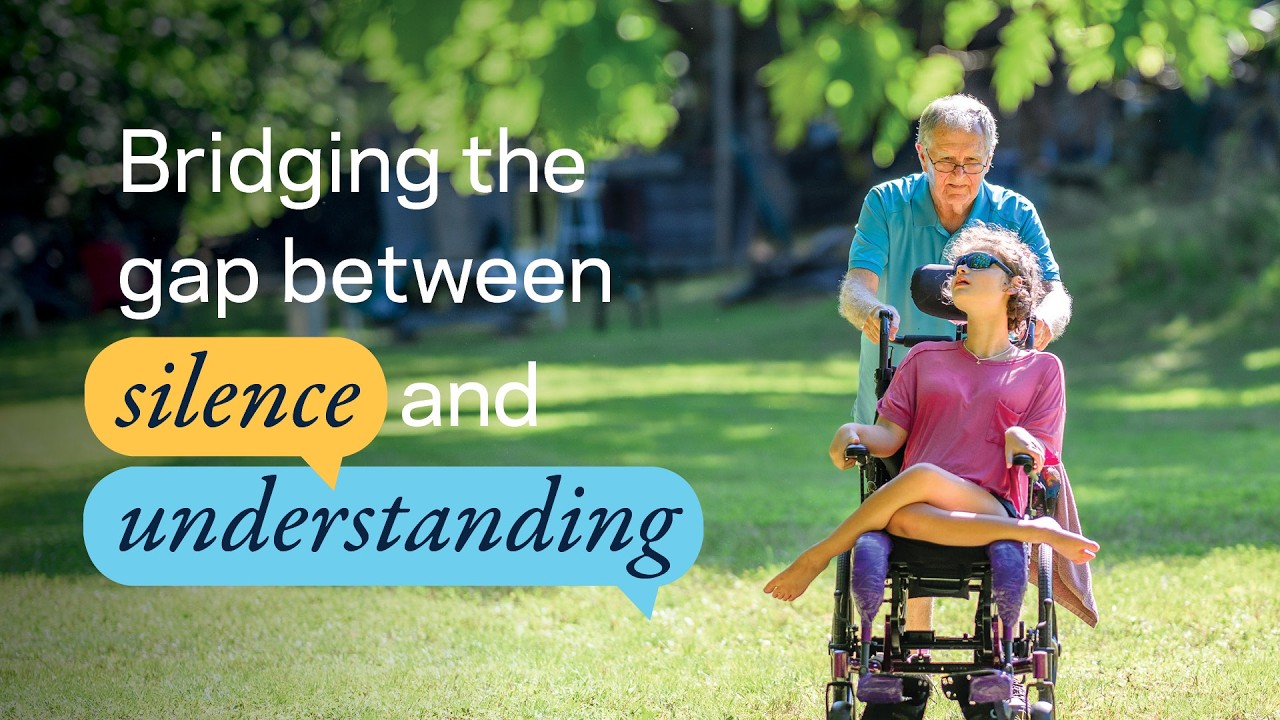
- 2:01How AI is Helping Nonverbal People CommunicateHow can artificial intelligence bridge the gap for nonverbal individuals and their caregivers?At the University of Notre Dame, Prof. Jarek Nabrzyski and his research team are developing Human-Centered AI technology designed to interpret nonverbal cues—such as facial expressions, body movements, and heart rate. Partnering with family caregivers like Ed Fennell, who has spent 19 years advocating for his granddaughter Haley, this project aims to create affordable, accessible AI tools that empower new caregivers with empathy and dignity.00:00 Ed and Haley’s story: The challenge of nonverbal communication 00:24 19 years of caregiving for someone with PIMD 00:35 Partnering with Notre Dame on AI research 00:54 Voice4PIMD: Augmentative and alternative communication technology 01:25 Supporting caregivers and continuity of care 01:48 Fighting for nonverbal communication | Notre DameLearn more about Prof. Nabrzyski's research: https://go.nd.edu/FFNonverbalCommunications#Notre Dame #AI #Accessibility #ArtificialIntelligence #AssistiveTechnology
- 2:01Fighting for Community RegenerationGary, Indiana, is a city with deep roots and a powerful story of resilience. Once a thriving steel town, Gary has faced decades of economic decline—but today, community leaders and the University of Notre Dame’s School of Architecture are working together to rebuild its downtown and restore opportunity.Through Notre Dame’s Housing and Community Regeneration Initiative, the city is developing a plan to revive its downtown, honor its history, and create a stronger future for residents. With community input and thoughtful urban design, Gary is charting a path toward social and economic renewal.
- 2:00Fighting to Educate Children in GhanaWhen Notre Dame student-athlete Daniel Boateng ’26 showed exceptional promise on the soccer field, his mother and grandmother reminded him to never lose sight of the power of education. Now a midfielder for the Fighting Irish, Daniel is helping children in his native Ghana access the same opportunities that changed his life.Through his nonprofit Changing Lives GH, founded with two Notre Dame teammates, Daniel is sponsoring 100 students who might otherwise never attend school and dreaming of a future where every child in Ghana can learn for free.Learn more: https://go.nd.edu/fighting-to-educate-children-in-ghana
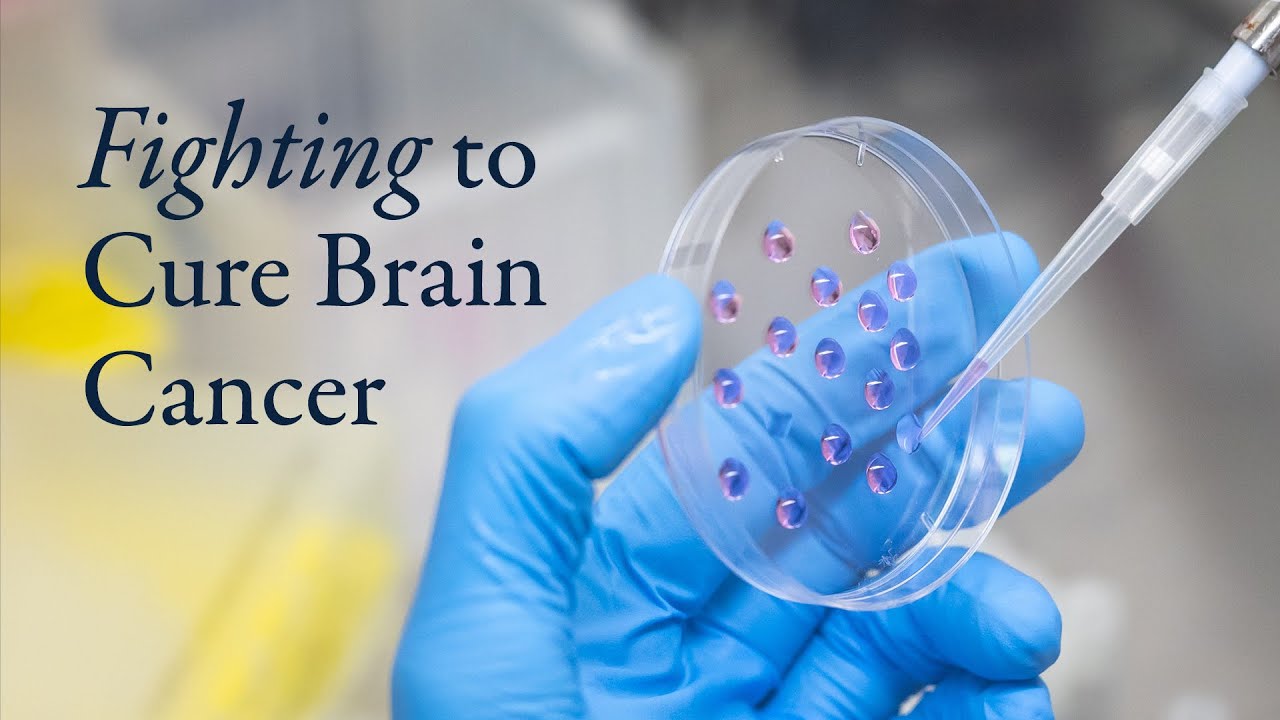
- 2:01Fighting to cure brain cancerEach year, more than 12,000 people in the U.S. are diagnosed with glioblastoma, an aggressive and incurable form of brain cancer. The disease grows rapidly, adapts quickly, and evades the immune system—making it one of the most difficult cancers to treat.At the University of Notre Dame, Meenal Datta, the Jane Schoelch DeFlorio Collegiate Professor of Aerospace and Mechanical Engineering, and her research team are pushing the boundaries of cancer research by taking the fight to space. In 2024, they launched a first-of-its-kind glioblastoma experiment to the International Space Station, using microgravity to grow more realistic tumor models and accelerate testing for new therapies.Their groundbreaking work is helping scientists understand glioblastoma in new ways—and bringing us closer to a cure here on Earth.
- 2:01Fighting for Maternal HealthThe United States has the highest maternal mortality rate of any developed nation. For many new mothers, the weeks and months after giving birth can be the most dangerous—and too often, lifesaving care ends too soon.When Notre Dame professor, nurse, and researcher Joyce Adams saw these risks firsthand, she developed a groundbreaking model of postpartum care. Tested in Ghana and now saving lives in the U.S., her Focused Postpartum Care (Focused-PPC) program offers women yearlong follow-up visits, education on warning signs, and peer-to-peer support.Learn more: https://go.nd.edu/fighting-for-maternal-health
- 2:01Fighting for Faster Virus DetectionNotre Dame researchers have developed an “electronic nose” that can sniff out bird flu before it spreads—helping farmers protect their flocks and livelihoods.Instead of slow, invasive lab tests, this new sensor detects airborne signs of disease in real time. Designed with farmers in mind, it comes in two easy formats: a barn-mounted monitor and a handheld device. Faster detection means fewer sick birds, safer food, and stronger farms.Learn more about Notre Dame research: https://go.nd.edu/fighting-for-faster-virus-detection
- 2:00Fighting to Improve Hurricane ForecastsEvery second counts in a hurricane.Notre Dame researchers are using drones and ocean floats to uncover how storms gain strength—helping predict not just where a hurricane will strike, but how powerful it will be.Better forecasts. Smarter decisions.Learn more: https://go.nd.edu/a3e931