







A global majority trusts scientists, wants them to have greater role in policymaking, study finds


In what is considered the most comprehensive post-pandemic survey of trust in scientists, researchers have found a majority of people around the world carry widespread trust in scientists — believing them to be honest, competent, qualified and concerned with public well-being.
Researchers surveyed more than 72,000 individuals across 68 countries on perceptions of scientists’ trustworthiness, competence, openness and research priorities.
The results, published in the journal Nature Human Behavior, also showed the general public’s desire for more engagement from scientists through communication and policymaking.
“This was a major collaborative study, involving dozens of labs from across the world, all of them asking the same questions to specific audiences, in their specific languages according to their own customs,” said Tim Weninger, the Frank M. Freimann Collegiate Professor of Engineering and director of graduate studies in the Department of Computer Science and Engineering at the University of Notre Dame. “This is the first time I have seen such a distributed and collaborative effort in the social sciences. Our results show that, generally, denizens worldwide do indeed trust scientists.”
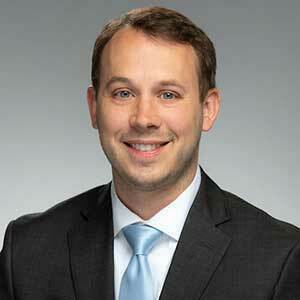
Weninger is an expert in disinformation and fake news and one of 241 researchers who contributed to the study as part of the Trust in Scientists and Science-Related Populism (TISP) Many Labs project, an international, multidisciplinary consortium of researchers at 179 institutions around the world.
Researchers sought to identify levels of trust in scientists, how demographic and country-level factors impact trust and vary between countries, perceptions of scientists in societal roles and policymaking, and which issues people believe scientists should prioritize.
A challenge to a ‘popular, dominant narrative’
The study challenges a “popular, dominant narrative claiming a crisis of trust in science and scientists,” the authors said. Building on previous studies, primarily focused on attitudes in the United States and Europe, the survey also includes individuals and countries long underrepresented in research.
An overwhelming majority of respondents (83 percent) believe scientists should communicate scientific concepts and research findings with the public. More than half (52 percent) believe scientists should be more involved in policymaking.
According to the study, “higher levels of trust were found among women, older people, residents of urban (vs. rural) regions,” higher-income earners, individuals who identify as religious and those with left-leaning or liberal political views. Education also positively correlated with trust.
In most countries, however, political orientation is unrelated to trust in scientists, the study found — one of several results that provided insight into global views.
Additionally, whereas some people might assume religion and science to be at odds, the TISP study found a positive association between trust and science and religious identity.
“That was the most surprising thing to me,” Weninger said. “Religiosity positively and significantly correlated with trust in science. Science and religion are often seen as being at odds with one another. This global study shows that religiosity and trust in science are commonly held in tandem by people across the world.”
The desire for more engagement
Overall, attitudes reveal a desire among the public to see scientists engage in science communication and policymaking — advocating for policies that address specific issues such as climate change and communicating research findings to government officials and politicians.
People also want to see scientists prioritize improving public health, solving energy problems and reducing poverty. The survey showed that people generally believe the scientific community prioritizes defense and military technology above all other research goals, which was found to be a lesser priority for most respondents.
Previous studies have shown trust in science and scientists as critical to managing global crises such as the COVID-19 pandemic. Weninger and the study’s authors said the results of the TISP survey “can help scientists and science communicators better tailor their communication to different audiences” and stressed the need for international research that includes underrepresented and understudied populations.
Challenges and recommendations
While the results of the TISP study strongly challenge current narratives, the consortium noted their findings reveal some areas for concern.
Though 57 percent of global respondents believed scientists are honest, and 56 percent believed scientists are concerned with public well-being, only 42 percent believe scientists are receptive to feedback or pay attention to others’ views.
“Anti-science attitudes, even if held by only a minority of people, raise concerns about a potential crisis of trust in science, which could challenge the epistemic authority of science and the role of scientists in supporting evidence-based policymaking,” the authors stated in the study.
With that in mind, the consortium suggested scientists find ways to be more open to feedback and dialogue with public audiences, increase public science communication efforts to highlight ongoing research in public health and energy, consider ways to reach conservative groups in Western countries and consider the role of the scientist in setting priorities aligned with public values.
The survey’s full dataset is available via a comprehensive dashboard, providing insights on science-related populism, science communication behavior and public perceptions about climate change. Through the dashboard, users can explore specific data at the country level and compare results.
Contact: Jessica Sieff, associate director of media relations, 574-631-3933, jsieff@nd.edu
Latest ND NewsWire
- Brain tumor growth patterns may help inform patient care managementAssistant Professor Meenal Datta (University of Notre Dame/Wes Evard) A team of researchers from the University of Notre Dame, Harvard Medical School/Massachusetts General Hospital, and Boston University has developed a technique for measuring a brain tumor’s mechanical force and a new model to estimate how much brain tissue a patient has lost.
- Notre Dame elects two new TrusteesTwo new Trustees — John F. Crowley and Danielle Walker Merfeld — have been elected to serve on the University of Notre Dame’s Board of Trustees effective July 1. …
- From reaction to resolution: The future of allergy treatmentTwelve-year-old Lauren Eglite was thrilled to attend a Notre Dame football game with her father, Erik, in 2017, even though her acute peanut allergy demands constant vigilance. She was even more excited when the stadium’s brand-new video board aired an NBC Fighting…
- Notre Dame student uses ‘American Ninja Warrior’ spotlight to fight world hunger via his nonprofitOn July 14 (Monday), a University of Notre Dame business student will compete in the semifinal round of NBC’s “American Ninja Warrior” to advocate for an end to world hunger, an ambition he works toward by making knotted dog toys and collecting donations to his nonprofit.
- In sub-Saharan Africa, 1 in 6 cancer medications found to be defectiveSerious quality defects were found in a significant number of cancer medications from sub-Saharan Africa, according to new research from the University of Notre Dame.
- Alumni Association awards 2025 Lennon Life PrizesThe Notre Dame Alumni Association recognized nine alumni clubs as recipients of the Lennon Life Prize — part of the Chuck and Joan Lennon Gospel of Life Initiative, a set of programs focused on encouraging the University’s dedicated network of clubs to uphold the value of life at all stages.


